






Buyers often discover a product in one place and finalize the purchase elsewhere. Implementing what is multi channel marketing involves deploying two or more distinct channels to reach, guide, and convert customers.
Aligning what is multi channel marketing across active storefronts helps sellers choose useful channels, adapt the message, and measure profitable demand instead of treating every campaign as a separate project.
What Is Multi Channel Marketing?
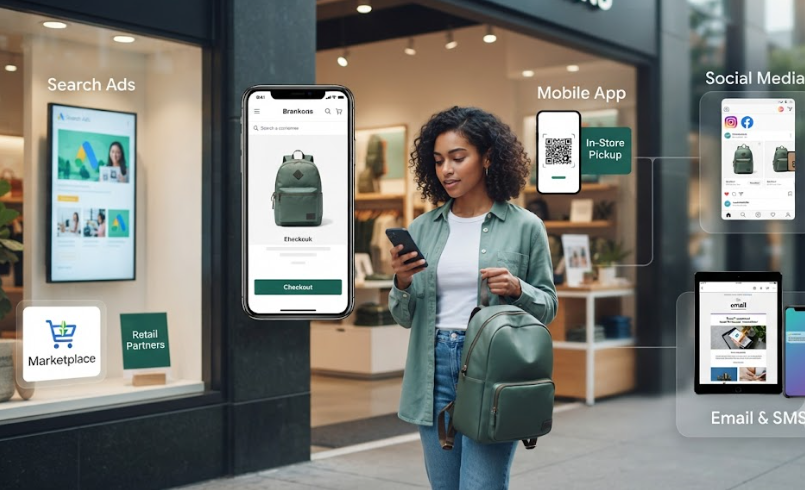
Multi channel marketing uses touchpoints such as a branded store, marketplaces, search ads, social media, email, SMS, retail, and product feeds. It gives customers more than one way to find and buy a product.

What It Means for Ecommerce Sellers
In daily selling, what is multi channel marketing? It is a coordinated approach that keeps product information, offers, and fulfillment expectations clear across active channels. Multichannel marketing combines promotional and distribution channels to reach customers.
A seller may use social content to introduce a bundle, a marketplace listing to capture product searches, a product page for high-intent traffic, and email to bring past buyers back. The product, stock, and buyer promise must still align.
Where Does Multi Channel Marketing Happen?
Select channels based on how buyers research and buy, not because competitors use them. Combine channels you own with places that create discovery or capture existing purchase intent.
Common Marketing Channels for Sellers
| Channel | Main role | Key requirement |
|---|---|---|
| Branded ecommerce store | Brand story, bundles, repeat orders | Accurate pages and checkout |
| Online marketplaces | Search-led demand | Compliant listings and delivery performance |
| Search and shopping ads | Active demand | Current product feed and matching page |
| Social media | Product discovery | Clear creative and available stock |
| Email and SMS | Launches and retention | Permission-based, segmented messages |
A visual gift brand may gain more from social discovery and a strong direct store. Replacement parts may perform better through marketplace search and email.
What Is Multi Channel Marketing Compared With Omnichannel Marketing?
Multi channel marketing uses several routes to reach the buyer. Those channels can work separately even when the brand keeps its offer and message consistent.
Omnichannel marketing connects customer interactions between channels. Multi channel marketing is usually the practical starting point for sellers.
| Multi channel marketing | Omnichannel marketing |
| Uses several sales or promotional channels | Connects the customer journey across channels |
| Channels may operate independently | Customer data and messaging are integrated |
How Does Multi Channel Marketing Work?
To answer what is multi channel marketing operationally, look at the systems behind the campaign. Price, availability, listings, and fulfillment must support the demand marketing creates.
Build From Accurate Product Data
Use consistent SKUs, product details, images, and attributes, then tailor copy to each platform. A centralized marketplace listing workflow helps teams control catalog updates without rebuilding every listing manually.
Match the Message to the Channel
Marketplace listings should answer product searches, social posts should explain the product quickly, and email can focus on launches, restocks, or bundles. Keep the value proposition consistent, but avoid identical messages everywhere.
Protect the Customer Experience After the Click
Do not promote products that are unavailable or cannot meet the delivery promise. Real-time inventory control helps avoid sending campaign traffic to items already sold elsewhere.
Measure Profit, Not Just Reach
Clicks and revenue are useful but incomplete. Channel-level profitability reporting helps review advertising cost, marketplace fees, shipping, refunds, and contribution by product or channel.
Why Use Multi Channel Marketing?
For brands deploying what is multi channel marketing, the main advantage is access to more qualified buyers. Some shoppers start with Google, others browse marketplaces, and past buyers may respond best to email or SMS. Using several relevant channels also reduces reliance on one traffic source.
The trade-off is coordination. More campaigns can create conflicting offers, overselling, untracked costs, and inconsistent buyer messages.
How to Build a Multi Channel Marketing Plan
A practical answer to what is multi channel marketing is a plan that gives each channel a defined purpose. Start with the buyer, product, and result the channel should influence.
A Practical First-Month Checklist
- Select one primary conversion channel and one discovery or retention channel.
- Promote products with complete data, reliable stock, and enough margin for the offer.
- Define the audience, message, offer, and measurement goal.
- Match campaign pricing and availability to the destination page or marketplace listing.
- Review conversion rate, stockouts, returns, acquisition cost, and net profit by channel each week.
Mistakes That Make Multi Channel Marketing Harder
A common mistake is treating every channel as a copy-and-paste destination. What is multi channel marketing worth if the product message, price, or stock level changes from one touchpoint to another? Buyers lose trust when an ad promotes an unavailable item or a marketplace listing does not match the product page.
Do not judge campaigns on sales alone. A high-revenue campaign can still lose money after advertising, fees, refunds, and fulfillment costs.
Conclusion: Build Reach Without Creating Chaos
Stripped of marketing fluff, what is multi channel marketing is a disciplined way to make products visible through the channels that matter to buyers while keeping the work behind every sale controlled. Choose channels with a clear role and confirm operations can support demand before scaling.
Crazy Vendor helps sellers bring listings, inventory, orders, fulfillment, customer support, and profit data into a more controlled ecommerce operation as their channels grow.