
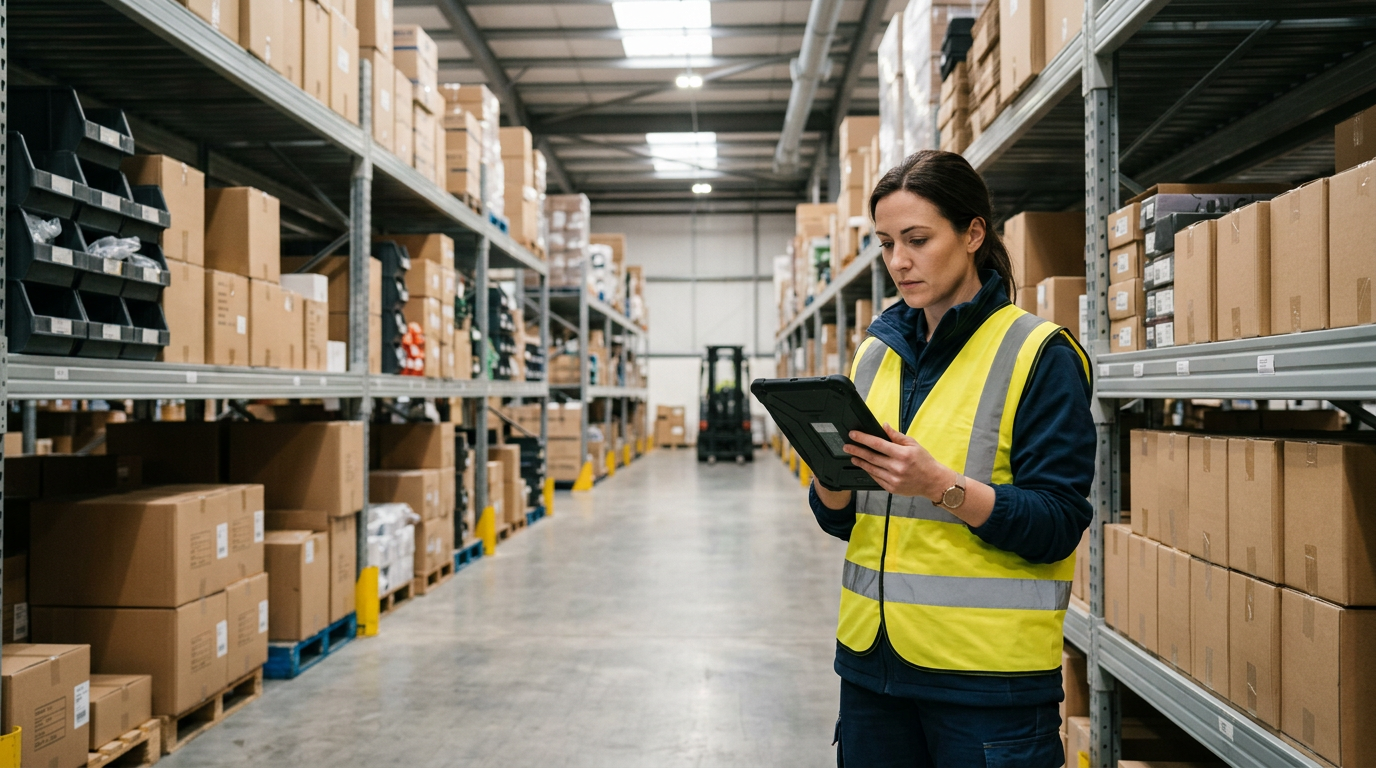






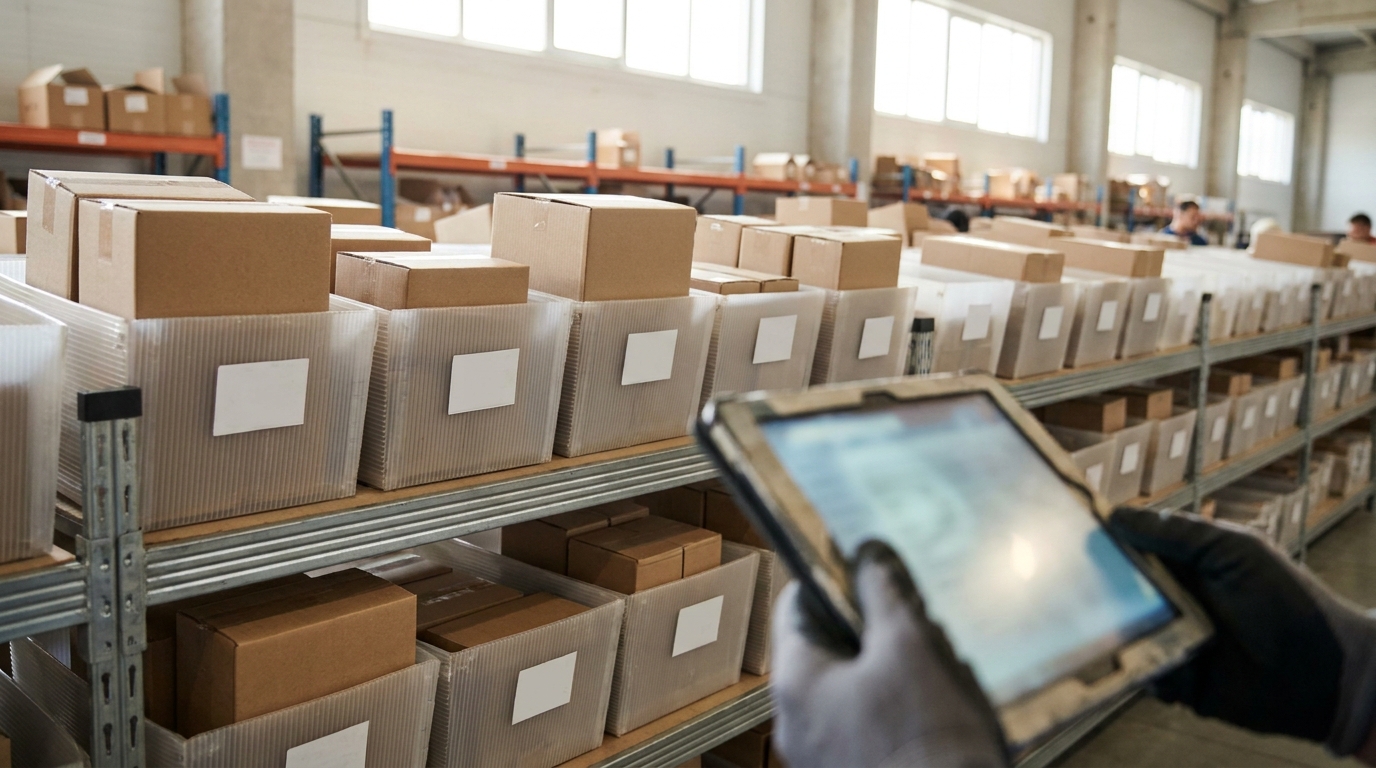



Amazon wholesale means buying branded products in bulk from a brand, a distributor or a wholesaler and reselling them in the Amazon store at a markup. You do not make the product and you do not create your own brand. You find authentic stock at a good price, get approved where Amazon requires it, list or match offers, and fulfill orders yourself or through Fulfillment by Amazon (FBA).
This guide covers how Amazon wholesale works, what you need to start, how to find and check suppliers, the invoice and brand approval rules, a worked profit example, fulfillment options, and the risks. The rules come from Amazon’s own seller guides, which we checked on November 15, 2026. Amazon updates its policies, so confirm anything that affects your account in Seller Central.
A note on the term: people also search "Amazon wholesale" to buy in bulk as a customer. That is Amazon Business, a different thing. This article is for sellers who buy wholesale stock to resell.
How Amazon wholesale works
- Pick products and a niche. Look for items with steady sales, healthy margins and a supplier who will sell to you.
- Register a business and open a selling account. Amazon says you typically need a registered business, such as an LLC, to buy from wholesalers, and you might need a reseller license, permits or other certifying documents.
- Find and validate suppliers. Buy from the brand or one of its direct distributors or wholesalers.
- Buy a first order and keep the invoice. The invoice is your proof of authenticity and may be needed for approval.
- List the product or match an offer on the existing product page, and price it to cover all costs.
- Fulfill orders with FBA, Amazon Warehousing and Distribution (AWD), or yourself, then reorder what sells.
What it costs to start
Amazon’s Professional selling plan is $39.99 a month plus selling fees. On top of that you pay for inventory, fulfillment, advertising and other running costs. The Professional plan is the one that lets you list in bulk and sell case packs and pallets through Amazon Business. See our Professional selling plan guide for the details of the plan.
| Cost | What to plan for |
|---|---|
| Selling account | $39.99 per month for the Professional plan, plus selling fees (source: Amazon) |
| Inventory | Your first order, shaped by the supplier’s minimum order quantity. See MOQ meaning |
| Amazon fees | Referral fee per sale, plus FBA fulfillment and storage fees if you use FBA. See Amazon FBA fees |
| Shipping to Amazon or to you | Freight, prep and labeling |
| Software and advertising | Inventory, profit tracking and ads, as needed |
Where to find wholesale suppliers
Amazon’s guide for sellers suggests trade shows, referrals from other sellers and professional networks, and mentions its Service Provider Network as a place to find wholesalers and other supply companies. A wholesaler is a middleman between manufacturers and sellers: it buys in bulk at a discount and sells to businesses at a slight markup. It does not typically sell to end customers.
| Supplier type | Good for | Watch out for |
|---|---|---|
| Brand direct | Best proof of authenticity, best chance of a brand authorization letter | Application process and sometimes a high opening order |
| Authorized distributor | Many brands in one account | Confirm the distributor is authorized by the brand |
| General merchandise wholesaler | Wide range, easy to start | Unclear brand authorization, thin margins |
| Online wholesale marketplace | Fast to compare many suppliers | Check each seller’s authorization yourself |
How to check a supplier before you pay
Amazon says sellers are responsible for selling authentic products, and branded products should come directly from the brand or from one of its direct distributors or wholesalers. Amazon suggests validating the supplier’s relationship with the brand by reviewing its business license and brand authorization letter. You can also:
- Look up the supplier’s office and warehouse locations.
- Check business bureau ratings and read reviews for complaints about service or product quality.
- Ask about the supplier’s liability policy.
- Ask for referrals and contact their other customers.
- Start with a small sample order to test product quality and shipping speed.
Sources Amazon does not accept as valid supply: in its sourcing guidance, Amazon says auctions and liquidation are not valid sources of supply, and that retail-to-retail drop-shipping is prohibited. Retail arbitrage, buying from stores to resell, works differently, and has its own pitfalls. See retail arbitrage.
Invoices and brand approval
Some brands and categories require approval before you can sell. When you search for a product in Seller Central, you see "Show limitations" next to it, and an "Apply to Sell" button if approval is needed. You are asked for a purchase invoice from a manufacturer or distributor, or a brand authorization letter.
Amazon’s wholesale guide lists what a valid invoice should include:
- Supplier information
- An itemized product list
- A date within the last 180 days
- Your name and address, matching your selling account
- The name and address of the manufacturer or distributor
- A combined purchase of at least 10 units
Amazon also asks for supplier invoices when it investigates a policy complaint, such as a claim that a product is not authentic. Amazon’s invoice requirements for appeals say the invoice must show a completed and fulfilled transaction and be authentic and unaltered, and Amazon staff have described a window of 365 days before the notification for those appeals. Because the day-count differs between the approval guide and the appeals guidance, keep every supplier invoice, in PDF or image form, and check the current requirement in Seller Central when you submit. Sources: Amazon’s guide on finding wholesalers and its help page Invoice requirements for appealing a policy violation.
Brand Registry and authorized resellers
A brand enrolled in Brand Registry controls its product pages. If you resell a registered brand’s products you can match an offer to an existing page after any approval, but you cannot create new product pages for that brand unless the brand assigns you a reseller role. Amazon’s guide to selling branded products explains the options, including how a brand can make you an authorized reseller.
Worked example: is a wholesale product profitable?
These numbers are an illustration. The FBA fee and referral rate vary by product, size and category, so use the current figures for your own item, for example from Amazon’s revenue calculator.
| Line | Amount |
|---|---|
| Selling price | $34.99 |
| Landed cost per unit (assumed, including shipping to you) | $18.00 |
| Referral fee (assumed 15%) | $5.25 |
| FBA fulfillment fee (assumed) | $5.50 |
| Profit per unit | $6.24 |
| Margin (profit ÷ price) | 17.8% |
| ROI (profit ÷ landed cost) | 34.7% |
Profit per unit is $34.99 − $18.00 − $5.25 − $5.50 = $6.24. Before you buy 500 units, remember that you do not control the price: other sellers can offer the same product, and the price you can charge is set by competition. Amazon’s guide recommends making sure list prices cover your purchase costs, selling costs and other expenses so you keep healthy margins. To measure real results by SKU after all fees and returns, use profit analytics instead of estimating.
Fulfillment options for wholesale stock
| Option | How it works | Good for |
|---|---|---|
| FBA | You send stock to Amazon, which picks, packs, ships and handles returns and customer service | Fast sellers, Prime eligibility |
| AWD (Amazon Warehousing and Distribution) | Low-cost bulk storage for FBA sellers that distributes inventory to Amazon and other channels. See what is Amazon AWD | Large wholesale quantities |
| FBM (fulfilled by merchant) | You store and ship orders yourself. See FBA vs FBM | Bulky items, slow movers, control over packaging |
| 3PL | A third-party warehouse stores and ships for you. See what is a 3PL | Selling on several channels |
| Dropshipping | A supplier ships to your customer; it must comply with Amazon’s dropshipping policy | Low upfront stock, less control |
Selling wholesale in case packs and pallets
Amazon says Professional sellers can sell products as case packs or pallets through Amazon Business, which lets you offer bulk discounts to business customers. Amazon Business is included in the Professional selling plan.
Risks of Amazon wholesale
- Thin margins. Many sellers can offer the same product, so price competition is common.
- Brand restrictions. A brand can restrict who may sell its products. Check approval requirements before you buy inventory.
- Invoice and authenticity complaints. A customer or brand can raise a complaint, and Amazon may ask for invoices. Keep clean supplier invoices for every purchase.
- Tied-up cash and slow stock. Large orders and minimum order quantities can leave you holding stock that sells slowly.
- Lost or damaged units in FBA. Units can go missing in fulfillment centers. Check for reimbursable cases. See our Amazon FBA reimbursement guide
Amazon wholesale vs retail arbitrage vs private label
| Wholesale | Retail arbitrage | Private label | |
|---|---|---|---|
| Where stock comes from | Brands, distributors, wholesalers | Retail stores and online stores | A manufacturer, under your own brand |
| Repeatable supply | Yes, by reorder | Limited to what is on the shelf | Yes, by reorder |
| Product page | Match existing listings | Match existing listings | Create and own the page |
| Brand protection | None for you | None for you | Brand Registry possible |
| Typical upfront stock | Moderate to large | Small | Large (minimum order quantity) |
Run a wholesale business across Amazon and Walmart
Once you have repeat suppliers, the work becomes tracking: what you bought, what is left, what sold and what you made. Crazy Vendor inventory management keeps stock per SKU and updates Amazon, Walmart, eBay, Etsy and Shopify when a quantity changes, reimbursements recovery flags lost and damaged FBA and WFS units with no commission on recovered funds, and profit analytics shows profit after fees. Plans start at $29/month with a 21-day free trial. See pricing.
Related: how to start Amazon FBA, how to calculate landed cost, safety stock formula and what is an ASIN.
Frequently asked questions
What is Amazon wholesale?
It is buying branded products in bulk from brands, distributors or wholesalers and reselling them in the Amazon store at a markup.
Can anyone sell wholesale on Amazon?
You need a selling account and typically a registered business. You may also need a reseller license, permits and supporting documents such as a purchase invoice or a brand authorization letter, depending on the products you sell.
How much does it cost to start selling wholesale on Amazon?
Amazon’s Professional selling plan costs $39.99 a month plus selling fees. You also pay for inventory, fulfillment, advertising and other costs, so the real starting budget depends mostly on your first inventory order.
Is wholesale better than private label?
Wholesale needs no product development and you can start with existing demand, but you do not own the product page or the brand, and competition on price is common. Private label gives you control of the brand but needs more upfront stock and marketing.
Do I need Brand Registry to sell wholesale?
No. Brand Registry is for brand owners. Resellers may need approval from the brand to sell certain products, and can request it in Seller Central by providing a purchase invoice or a brand authorization letter.
What invoice does Amazon accept for wholesale products?
Amazon asks for an itemized supplier invoice showing the supplier and your details, the product list, and a recent date, and for approval requests it lists a combined purchase of at least 10 units. Check the current rules in Seller Central before you submit.
Updated November 15, 2026.